
Mistake 1: thinking the opponent's Protect gives you full damage back
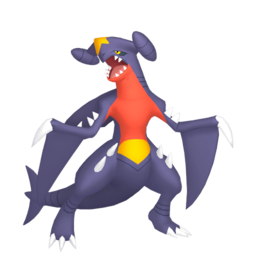
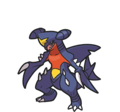
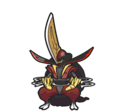
In the Showdown code, a move is marked as spread as soon as it has more than one target, and that happens before Protect is checked. If Kingambit protects, Incineroar takes Garchomp's Earthquake with the same reduction as if both had taken it.
That's why the calculation to run is always the spread one. If you need full damage against one opponent, what gives it to you is a single-target move.


Mistake 2: using Earthquake because your partner flies
Earthquake, Surf, Discharge and Bulldoze hit everyone adjacent, your partner included. The simulator counts it as a target before checking whether it's immune, so putting Mega Staraptor next to Garchomp avoids the self-damage, but not the reduction.
| Attack | Power | Who it hits | Effective power when spread |
|---|---|---|---|
| Earthquake | 100 | Opponents and partner | 75 |
| Surf | 90 | Opponents and partner | 67,5 |
| Make It Rain | 120 | Opponents only | 90 |
| Rock Slide | 75 | Opponents only | 56,25 |
Mistake 3: not counting your partner when one opponent is left
When a Pokémon faints, it stops counting as a target. If the opponent has only one Pokémon left on the field, a Rock Slide or a Make It Rain has a single target and hits in full.
Earthquake doesn't work the same way while your partner is still standing: there are still two targets and the reduction stays. That's the endgame trade-off. Earthquake gives you the Ground hit you need, and you pay with 25% less damage and with hurting your partner if it isn't immune. A single-target move hits in full, and you pay by losing Earthquake's coverage.
Mistake 4: treating accuracy as a single roll
The simulator checks accuracy target by target. A Rock Slide, at 90%, can hit one and miss the other, and its flinch chance is also rolled separately. Against two opponents, the chance of hitting both is 81%.
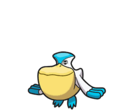
There's also a way to stop them all at once: Wide Guard, with +3 priority, protects both Pokémon on the user's side from spread moves that turn. In Champions it's learned by Aerodactyl, Pelipper, Garganacl and Armarouge, among others. If the opponent has it, we make sure to bring at least one single-target move per Pokémon.