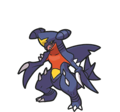
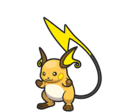
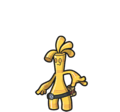
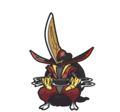




Paralysis: the Speed drop stays, the lottery goes
In Scarlet and Violet, a paralyzed Pokémon was fully paralyzed one turn in four (25%). In Champions it is one turn in eight (12.5%). What does not change is Speed: it is still halved.
You feel the difference over a whole game. The chance that a paralyzed Pokémon acts on both of its next two turns goes from 56% to 77%, and on four turns in a row, from 32% to 59%. Thunder Wave stops being a bet on stealing turns and becomes mostly speed control: it lets your slow attackers move first, not something to hope the opponent sits still.
Sleep: two turns at most
A sleeping Pokémon used to lose one, two or three turns, all equally likely. In Champions it loses one or two: it has a one-in-three chance to wake up on its second turn and always wakes up on the third. On average it loses a little less (1.67 turns instead of 2), but the real change is that the worst case is gone.
That gives you a fixed count. If your Pokémon has been asleep for two turns, it moves on the next one: you can rely on it instead of switching it out. And the other way round: if the opponent has already lost two turns asleep, expect it to attack. Sleep Powder, which Venusaur learns in Reg M-C, is still very useful because it guarantees at least one lost turn, but it misses one time in four (75% accuracy).
Freeze: it no longer decides games
Freeze was the most unfair status: a 20% chance to thaw each turn with no cap, so on average you lost four turns and sometimes the whole battle. In Champions the chance goes up to 25% and the Pokémon always thaws on its third turn: it loses two turns at most, and a little over one on average.
On top of that, Freeze-Dry no longer freezes. Ice Beam and Blizzard keep their 10%, but the effect is so short that it is not worth factoring in when you pick a move.
Burn and poison: the ones that stay the same
Burn and poison work just like in Scarlet and Violet. Burn takes a sixteenth of max HP at the end of each turn and halves the damage of the burned Pokémon's physical moves. Poison takes an eighth, and bad poison starts at a sixteenth and grows every turn.
With paralysis, sleep and freeze weaker, burn gains weight by comparison: once it lands it does not depend on any roll, and it cripples a physical attacker for the whole battle. Will-O-Wisp, with 85% accuracy, is one of the status moves that come out best from the rule changes, especially against physical attackers like Sneasler or Tyranitar.
Moves with weaker secondary effects
Champions also trims several moves. Iron Head makes the target flinch 20% of the time instead of 30%. Moonblast lowers its Special Attack 10% of the time instead of 30%. And Dire Claw, Sneasler's signature attack, goes from a 50% chance to poison, paralyze or put to sleep down to 30%: 10% for each status.
Not everything changes. Rock Slide keeps its 30% chance to flinch both opponents and Scald its 30% burn chance. Next to Iron Head, which only hits one target and now flinches less, Rock Slide gains value as a pressure move in doubles.
What to do with all this
Play the percentages. With fewer turns lost to status, the player who controls speed and positioning wins, not the one waiting for a timely full paralysis. Pick moves for their damage and how many targets they hit, not for their secondary effect, and expect a sleeping or frozen Pokémon to be back soon.
Sneasler is still among the most used Pokémon in Reg M-C, but for its damage and Speed: Dire Claw's 30% is a bonus, not the plan. To see how hard each move hits without relying on luck, try it in the damage calculator.