













Matchups in VGC: what your Pokémon beats and loses to
A Pokémon can win 52% of its games and still lose almost every time against one specific opponent. Matchups show those differences, and with them you know what to watch out for.
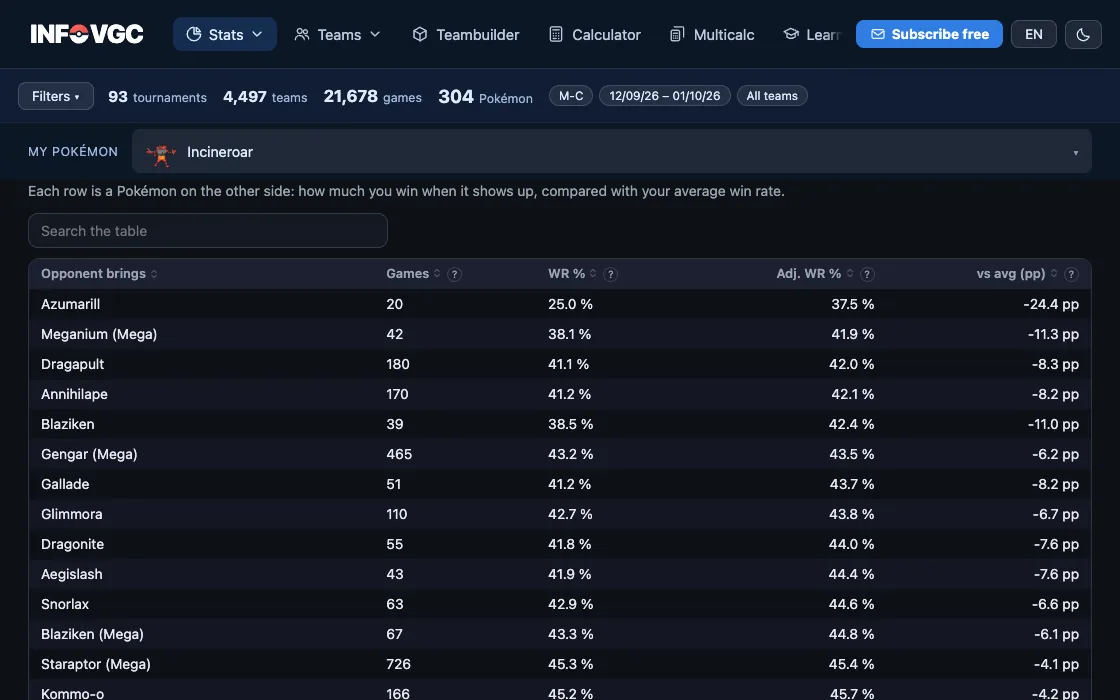

Pick your Pokémon
Search for the Pokémon you want to study. At the top you see how many rounds it has played in the filter and how much it wins overall; below, how that result changes depending on what the opponent brings.
How to read the table
Each row is a Pokémon on the opposing team, with the games, the win rate, the adjusted WR and the difference from your average in points. A big negative difference is a bad matchup; a positive one, a matchup that favors you. Min. games removes opponents with a small sample.


What counts as facing it
The result is per round: in a Bo3 the whole set counts. The opponent "brings" a Pokémon if it's on their team sheet, even if they didn't lead or bring it in that game. These are real games, not simulations.



What to do with a bad matchup
If a heavily played opponent beats you a lot, check in the calculator what your team does to it and what it does to you. Sometimes a different spread or item is enough; other times you need a teammate that stops it.



Frequently asked questions
Why is the difference in points and not in percent?
Because it's a subtraction: if your Pokémon wins 52% and wins 45% against one opponent, the difference is 7 percentage points.
How many games do I need to trust it?
The more, the better. Below about 50 the result swings a lot; that's why adjusted WR is shown too, pulling toward 50% when the sample is small.
More guides
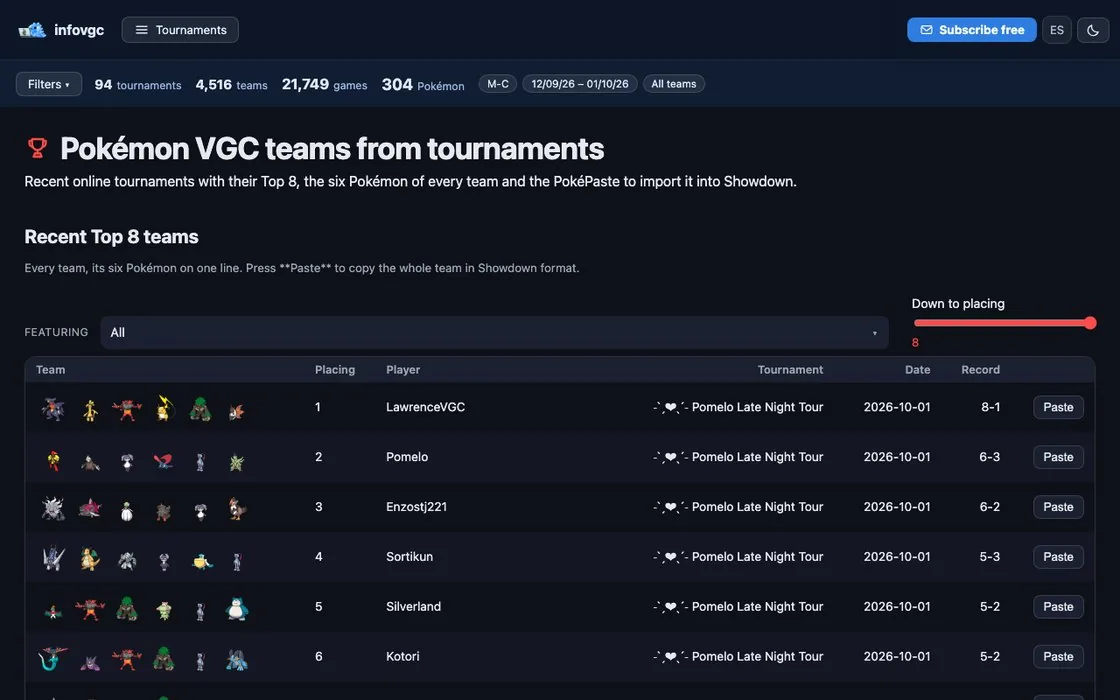 01 · 6 min read
How to start playing VGC, step by step
From your first team to your first tournament in eight steps.
Read the guide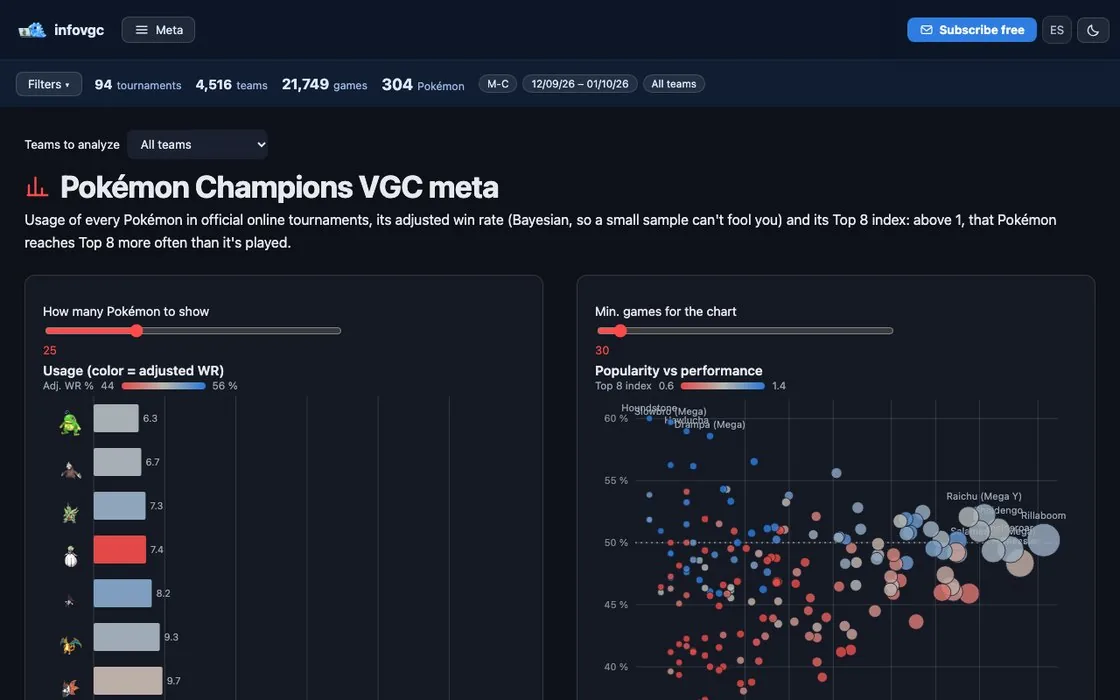 02 · 5 min read
What is VGC: competitive Pokémon explained
Doubles, level 50, stat points and best-of-three games.
Read the guide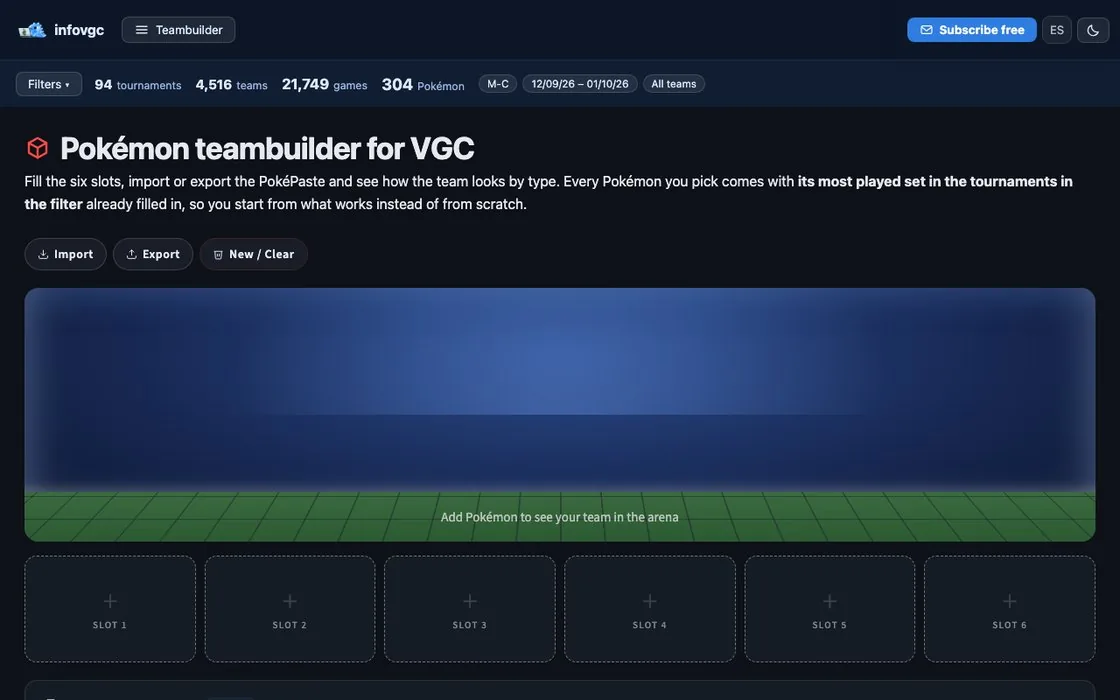 03 · 6 min read
How to build a VGC team
From a two-Pokémon core to the sixth slot, with data.
Read the guideTry it with real data
Every infovgc tool is free and built on the public team lists of Pokémon Champions tournaments.