








The team preview rules
In Reg M-C battles each player brings six Pokémon at level 50 and, after seeing the opponent's team, picks four for that battle. A team cannot have two Pokémon of the same species or two with the same item. That is what the Pokémon Showdown simulator calls flat rules, and what Victory Road's summary of the rules describes.
The timer Showdown uses for the format gives about 90 seconds for team preview, seven minutes of your own time for the whole battle and around a minute per turn. Not much room: it pays to reach team preview with a plan for each kind of opponent.
What open team sheets show
At in-person tournaments, players swap team sheets at the start of each round, according to Victory Road's summary of the rules and what Bulbagarden reported. On Showdown, the best-of-three format always shows them and the single-game format offers them if both players accept.
The sheet shows a lot: each Pokémon with its item, its ability and its four moves. What it never shows is stat points. On the nature, sources disagree: the simulator does show it in Champions and Victory Road includes it, but Bulbagarden reported that the rules left it out. If in doubt, do not count on it.
| Opponent's info | Shown? |
|---|---|
| Pokémon and form | Yes |
| Item (Mega Stone included) | Yes |
| Ability | Yes |
| Moves | Yes |
| Nature | Depends on the source |
| Stat points | No |
What to look for on the opponent's sheet
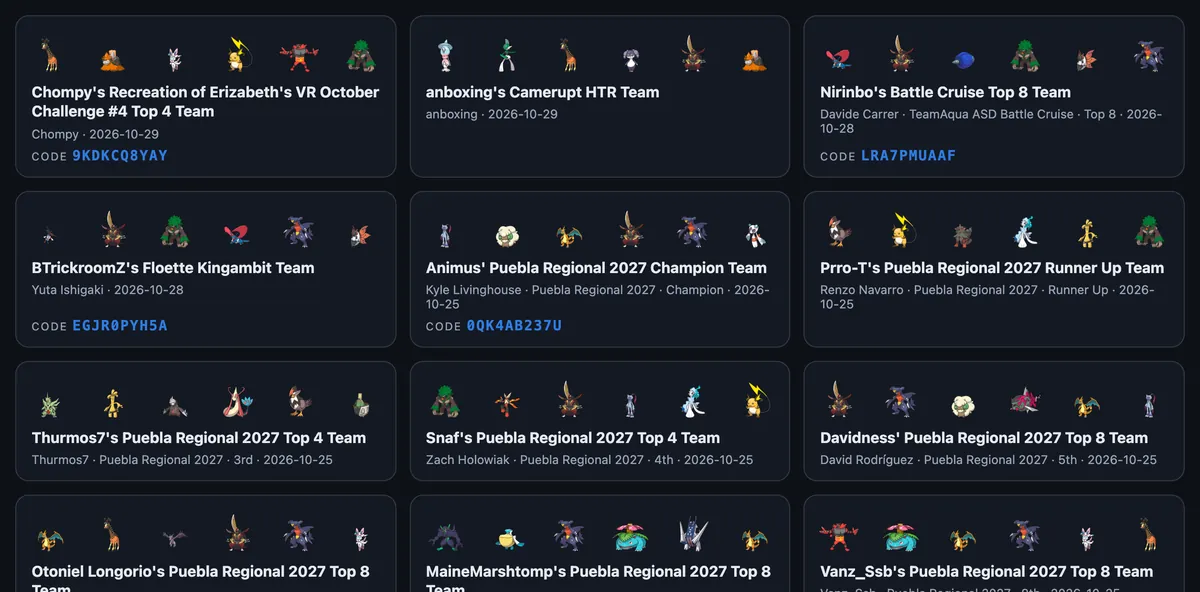
Mega Stones tell you which Megas they can use. If they carry two, like the Puebla champion with Charizard Y and Froslass, only one will Mega Evolve: think about which one they would bring against you and prepare both answers.
Items and abilities change how you play against each Pokémon. A Sneasler with Focus Sash survives a hit from full HP; one with White Herb gets triggered by your Intimidate. A Kingambit with Defiant punishes that same Intimidate.
And moves give the plan away: Trick Room, Tailwind, Fake Out or Protect on whoever carries them tell you what the opponent will try in the first turns.
An order for deciding in 90 seconds
First, weather: who sets it on each side and who is slower, because when they come out together the slower one's weather stays, and a Mega's weather wins the turn it Mega Evolves. Second, Speed: if the opponent has Tailwind or Trick Room, do you have something to stop it or to ride it out?
Third, the first turn: how many Fake Outs and Intimidates there are on each side and where they will go. Fourth, your Megas: pick the one that fits best against that team, not the one you like most. And last, your lead: two Pokémon that cover each other, with the other two in the back to answer whatever the opponent shows.
What you cannot see: exact Speed
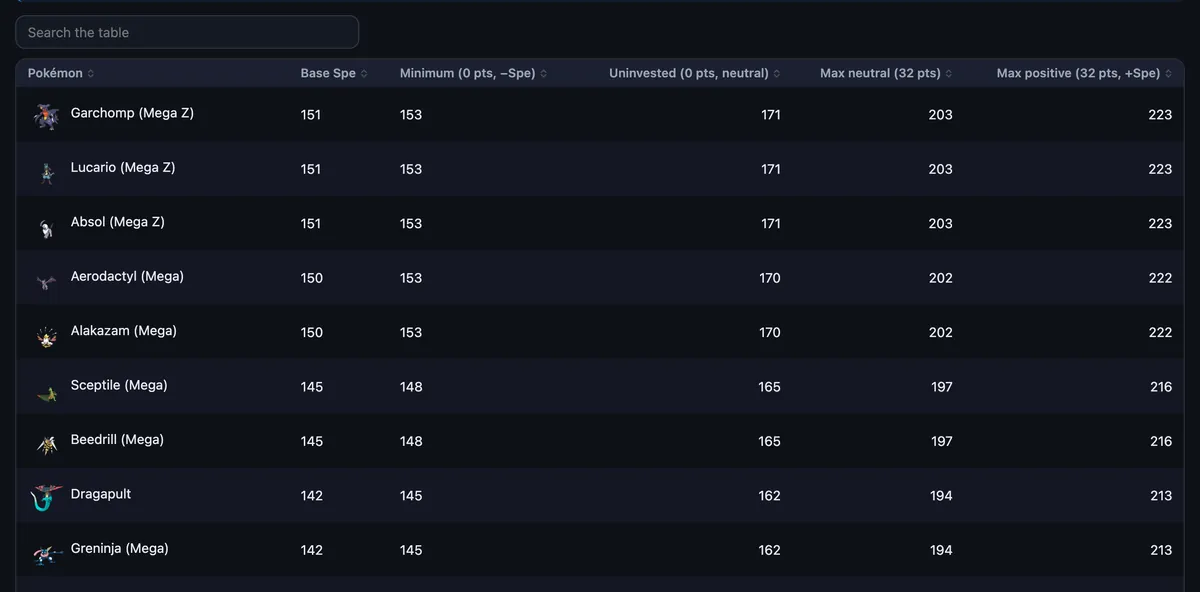
Since stat points are hidden, you do not know each opponent's exact Speed. A Pokémon may have full Speed investment or none, and there is a fair gap between those two extremes: at level 50, each stat point adds one point.
The careful approach is to assume the worst against fast threats (that they run full Speed investment) and not to bet an important turn on a speed tie. Usage data helps: on the Speed Tier page you can see which Speeds repeat across meta teams.
Best of three
In best-of-three sets, the first game is also information. You already know which pair the opponent leads with, who they Mega Evolve and how they use their speed control, and you can change your four and your lead for the second game.
The opponent will do the same, so do not repeat a plan that lost just because it almost worked. And think about which four you would bring if the opponent switches to their second Mega: it is the most common adjustment between games.


